Anti-Jewish decrees and restrictions
Diary of Anne FrankAnti-Jewish decrees and restrictions were the system of rules that progressively confined Jews’ movement and participation in public life under German occupation of the Netherlands. In Anne Frank’s diary, they are not an abstract list: they reshape how people travel, shop, study, celebrate, and understand their place in the country they call home. Their force lies both in the daily barriers they impose and in the way they make Jewish identity an externally enforced condition of danger and exclusion.
Background and Scope
Anne Frank places the restrictions within a longer history of anxiety. Relatives in Germany suffered under Hitler’s anti-Jewish laws; after the pogroms of 1938, her two maternal uncles fled to North America, while her elderly grandmother came to live with the family. After May 1940, the war, Dutch capitulation, and arrival of German forces brought a new phase of trouble for Jews in the Netherlands.
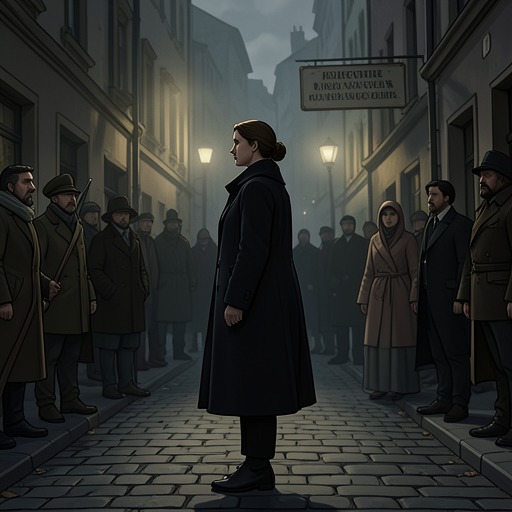
The decrees reached into nearly every sphere of ordinary life. Jews had to wear a yellow star and surrender their bicycles; they could not use streetcars or cars, even their own. Shopping was limited to the hours between three and five in the afternoon, and Jews were required to use Jewish-owned barbershops and beauty parlors. An evening curfew barred them from the streets between eight at night and six in the morning.
The restrictions also excluded Jews from entertainment, sport, and social contact. They were forbidden to attend theaters and movies, use swimming pools, tennis courts, hockey fields, or other athletic grounds, go rowing, or take part in public athletic activity. They could not visit Christians in their homes, and were required to attend Jewish schools. Even sitting in their own gardens or those of friends after eight in the evening was prohibited. The accumulating rules narrowed not one activity but the ordinary space in which a life could be lived.
Daily Life Under the Rules
Anne’s account shows how a regulation became a physical effort. In June 1942, during sweltering weather, she had to walk everywhere, including the long journey between her school on Stadstimmertuinen and a dentist on Jan Luykenstraat. Only then did she recognize how pleasant the streetcar had been. The ferry remained an available means of crossing, but the loss of ordinary transport turned routine errands into burdensome journeys.
The yellow star made the imposed distinction visible to others. When Anne, her parents, and their bags were walking in the rain on the way to hiding, people heading to work looked at them sympathetically; the conspicuous star, she wrote, spoke for itself. It marked the family as a target of the system even as they were carrying out a plan to escape its reach.
The restrictions also altered how the family experienced time and celebration. Hanukkah and St. Nicholas Day fell only a day apart in 1942. The family observed Hanukkah modestly, exchanging a few small gifts and lighting candles for only ten minutes because candles were scarce; Mr. van Daan made a wooden menorah. The entry presents religious observance continuing within a life shaped by deprivation, rather than disappearing under it.
From Restriction to Hiding and Persecution
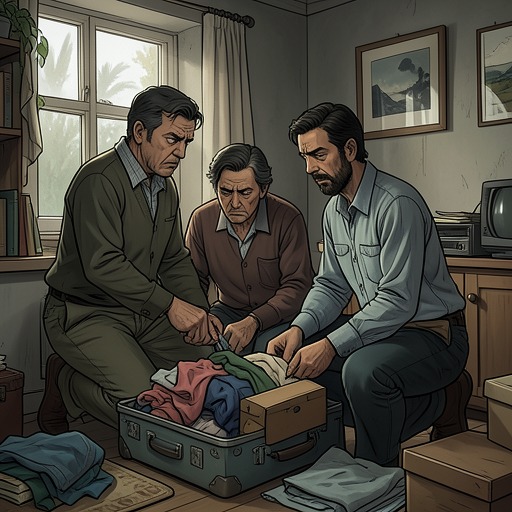
The rules formed part of the pressure that preceded the family’s decision to hide. Anne later explained that furniture and clothing had been moved out of the apartment over several months, and that the family had planned to go into hiding on July 16. Margot’s call-up notice forced them to advance the plan by ten days. They left for the hiding place in Otto Frank’s office building with schoolbags and shopping bags, while the yellow star signaled their exposed position to passersby.
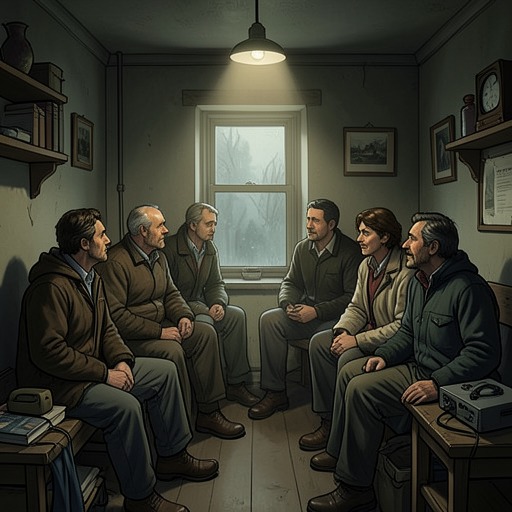
In hiding, news from outside made clear that restrictions were only one part of a larger persecution. Fritz Pfeffer told the residents that friends and acquaintances had been taken away and described searches for Jews, arrests, and deportations. Anne also recorded the separation of families and the removal of people from their homes, as well as the fear experienced by Dutch Christians whose sons were being sent to Germany. She contrasted this reported suffering with the relative safety of the Annex and felt guilt that she could sleep in a warm bed while friends endured hardship outside.
The scale of the threat is confirmed by the fate of the eight residents. After their arrest, they were taken first to a prison in Amsterdam and then to Westerbork. On September 3, 1944, they were deported in the last transport to leave the camp and arrived in Auschwitz three days later. The diary’s record of rules and daily consequences thus belongs to a history that culminated, for the people in hiding, in arrest and deportation.
Identity, Belonging, and the Limits of Freedom
As restrictions stripped Jews of rights while imposing obligations, Anne’s writing turns from daily constraint to collective identity. After a security incident in the Annex led to new precautions, she reflected that Jews were chained to one spot, without rights but with a thousand obligations. Her hope was that the war would end and that Jews would again be people, not only Jews. The formulation registers both the coercive power of the laws and her insistence that they did not exhaust the meaning of Jewish life.
That insistence coexists with a keen sense of religious and communal continuity. Anne wrote that Jews could not simply become Dutch or English, but would remain Jews—and that they would want to remain so. The contrast is significant: the regime imposed Jewish identity as a basis for exclusion, while Anne also considered it a lasting part of a people’s history and self-understanding.
In May 1944, she confronted reports that German Jews who had immigrated to the Netherlands and been sent to Poland might not be allowed to return after Hitler was gone. The prospect made the language of wartime freedom and justice ring hollow: even before the war had ended, Jews were being treated as lesser beings. Anne’s response was not to relinquish her attachment to the country. She wrote that she loved Holland, had hoped it would become a fatherland after she lost her own, and still hoped it would. The decrees sought to make belonging conditional; her hope preserves a claim to belonging despite that rejection.